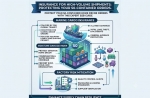
THE CORE CONFLICT: INVENTORY RISK VS. UNIT COST
Navigating the tension between low minimum order quantities (MOQs) and low unit costs is the primary operational hurdle for modern home decor category managers. High-volume production runs slash unit costs by up to 40% but simultaneously tie up precious working capital. Conversely, small-batch sourcing preserves liquidity but exposes your brand to high freight premiums and manufacturing overheads. How do you choose?
Sourcing teams frequently miscalculate the total cost of ownership (TCO) by ignoring storage, depreciation, and clearance costs. In the homeware sector, deadstock can erode net margins by 15% annually. Scale hurts flexibility. Agility costs money. Finding the balance requires a deep understanding of your product's lifecycle and material constraints.
A recent operational analysis of a mid-sized European home retailer revealed that shifting 15% of their core inventory from rigid mass production to an agile, hybrid sourcing model reduced total deadstock by 22%. While unit costs for the agile portion rose by 8%, the overall portfolio margin improved by 3.4% due to fewer clearance markdowns. Data drives survival.
MATERIAL-SPECIFIC SCALE THRESHOLDS: ACACIA, BAMBOO, AND WOVEN FIBERS
Choosing the right production scale depends heavily on whether your product is made of rigid materials like Acacia wood or flexible hand-woven fibers like seagrass and water hyacinth. Rigid materials require high-precision machinery, kiln-drying calibration, and specialized CNC tooling that make small production runs financially unviable. On the other hand, natural woven fibers rely on manual craftsmanship, which allows for significantly lower setup costs and smaller minimum order runs.
For instance, setting up a production line for Acacia wood serving trays requires calibrating industrial sanders and cutters, which typically demands a minimum run of 1,000 units to amortize the setup labor. Bamboo products, especially laminated or pressed bamboo, require hydraulic hot-press machinery that operates efficiently only at scale. Woven goods do not share these industrial bottlenecks.
|
Material Type
|
Optimal MOQ (Units)
|
Setup Cost & Tooling
|
Key Production Risk
|
|
Acacia Wood
|
1,000+
|
High (CNC, Kiln Calibration)
|
Moisture cracking & warping
|
|
Pressed Bamboo
|
1,500+
|
Medium-High (Hydraulic Pressing)
|
Delamination & mold
|
|
Woven Fibers (Rattan, Seagrass)
|
300 - 500
|
Low (Manual Weaving Frames)
|
Dimensional variance
|
As shown in the table, manual weaving of seagrass and water hyacinth operates on a highly variable cost structure. This means a batch of 300 woven baskets carries nearly the same per-unit labor cost as a batch of 3,000. Use this material reality to design your product lines strategically.
RISK MITIGATION: THE HYBRID SOURCING FRAMEWORK
A hybrid sourcing framework mitigates supply chain risks by combining large-scale base manufacturing with agile, small-batch seasonal runs. Under this model, global buyers place high-volume orders for evergreen core products while reserving small-batch capacity for trendy, seasonal designs. This dual-track approach keeps your supply chain highly responsive to market shifts without sacrificing baseline profitability.
Managing two separate supply chains can introduce severe quality and compliance risks if not handled correctly. Sourcing from unverified, non-compliant workshops to achieve low MOQs often leads to costly customs delays or product recalls. You must ensure that both your high-volume and low-volume production lines meet international standards.
Partnering with a single, vertically integrated manufacturer that holds BSCI, FSC, and SMETA certifications solves this operational challenge. By consolidating your orders, you can leverage your high-volume acacia wood orders to negotiate lower MOQs on experimental rattan or water hyacinth designs. One certified partner. Consistent quality. Zero compliance headaches.
QUALITY CONTROL AT SCALE: PREVENTING DEFECT SPIKES
Preventing product defects during high-volume production runs requires integrating strict in-line moisture control and standardized jig fixtures directly onto the factory floor. When scaling a product run from 500 to 10,000 units, human error and environmental variables multiply exponentially. Without rigorous quality gates, a minor calibration error can ruin an entire ocean container of hand-crafted homewares.
Moisture control is the single most critical factor when exporting natural materials like Acacia, bamboo, and rattan to temperate climates. If the moisture content exceeds 12%, the risk of mold and warping during the 40-day sea transit increases by over 80%. Conversely, dropping below 8% causes the wood to crack under dry retail environments.
We solve this at Ngoc Dong Ha Nam by enforcing daily moisture checks with calibrated pin meters at three distinct production stages: after kiln drying, during assembly, and immediately before final packaging. Standardized metal jigs are used for all hand-woven items to guarantee that dimensional variance remains under 3%. Precision is non-negotiable.
THE SWEET SPOT: HOW TO OPTIMIZE YOUR ORDER ALLOCATION
Finding your procurement sweet spot requires allocating 70% of your purchasing budget to high-volume, cost-optimized core products and reserving 30% for high-margin, small-batch market tests. This 70/30 allocation model optimizes container load utilization (CBM) while giving your design team the freedom to test new trends. It limits your financial exposure while keeping your product catalog fresh and engaging.
To implement this, group your product SKUs by material and manufacturing complexity rather than aesthetic collections. Run your high-volume Acacia and bamboo items in consolidated 40ft High Cube containers to minimize ocean freight per unit. Use the remaining container space to tuck in lightweight, nested woven baskets from your small-batch test runs.
This smart loading strategy reduces empty shipping space, lowers your average carbon footprint per item, and satisfies strict environmental audits. The result is a highly resilient, cost-effective, and sustainable supply chain that adapts to retail demand in real-time. Stop guessing. Start optimizing.
This article is authored by Thong Nguyen – Co-owner & Sales Director at Ngoc Dong Ha Nam Co., Ltd. With 25+ years of experience managing and operating manufacturing facilities for export housewares and handicrafts, we specialize in providing high-quality bamboo, rattan, water hyacinth and natural acacia wood manufacturing solutions for global retail partners.
FREQUENTLY ASKED QUESTIONS
How do you balance unit cost with minimum order quantities (MOQs)?
Balancing unit cost and MOQs requires implementing a 70/30 hybrid sourcing framework where core items are mass-produced and seasonal items are ordered in smaller batches. This keeps average acquisition costs low while minimizing inventory write-down risks.
Why does Acacia wood require higher minimum order quantities than Seagrass?
Acacia wood requires higher MOQs because of the high setup costs associated with CNC tooling, kiln drying calibration, and machinery configuration. Seagrass products are hand-woven, meaning they rely on manual labor which has low setup costs and allows for smaller production runs.
How does Ngoc Dong Ha Nam guarantee product consistency during mass production?
Ngoc Dong Ha Nam guarantees consistency by enforcing strict in-line moisture checks (8%-12%), using custom jig fixtures, and maintaining BSCI-certified factory standards. These measures ensure dimensional accuracy and prevent warping during transit.
What are the risks of sourcing small batches from uncertified factories?
Sourcing from uncertified factories exposes brands to severe regulatory risks, customs delays, and quality failures due to poor moisture control. Utilizing a certified manufacturer like Ngoc Dong Ha Nam ensures compliance with FSC, BSCI, and SMETA standards.