THE HIGH-STAKES REALITY OF GLOBAL TRADE: WHY REGULATORY BLINDSPOTS CAN BANKRUPT YOUR BRAND
In the high-end home decor and furniture industries, sourcing exquisite wooden and bamboo products is a cornerstone of curated collections. However, behind the aesthetic appeal of a beautifully crafted acacia serving tray or a structured bamboo storage chest lies a complex, high-stakes web of international trade regulations. For global buyers, procurement directors, and interior designers, an unverified supply chain is no longer just a minor operational risk—it is a financial landmine. [1.1.4]
Governments worldwide have dramatically intensified their enforcement of trade defense instruments. In recent years, the United States and the European Union have levied massive anti-dumping duties (ADD) and countervailing duties (CVD) on wood products, decorative panels, and wooden cabinetry originating from specific Asian manufacturing hubs. With preliminary anti-dumping margins on certain products soaring past 190%, an importer who unwittingly purchases goods from a non-compliant supplier can face retroactive customs bills that wipe out profit margins overnight.
The Illusion of Safety in Transshipment
Many buyers believe that simply shifting their purchase orders to a different geographical location shields them from these penalties. This is a dangerous misconception. Customs agencies, such as US Customs and Border Protection (CBP) and the European Commission, have launched aggressive anti-circumvention investigations. They are actively auditing shipments that attempt to bypass high-tariff jurisdictions by routing raw materials through third countries for minimal assembly. If your supplier cannot prove the absolute, plantation-to-port origin of their timber or bamboo, your shipments risk being seized, delayed, or hit with catastrophic retroactive duties.
Why Interior Designers and Retail Giants Are Vulnerable
For large-scale retailers and boutique hospitality designers alike, a disrupted supply chain means missed deadlines, empty shelves, and damaged brand reputation. Sourcing sustainable home decor should be an inspiring endeavor focused on craftsmanship and green living, not a legal nightmare. To safeguard your business, you must understand the mechanics of trade regulations and partner with manufacturers who treat compliance as an art form.
DECODING THE FINE PRINT: THE MECHANICS OF ANTI-DUMPING DUTIES AND CUSTOMS AUDITS
To navigate the turbulent waters of international trade, B2B buyers must first understand what anti-dumping and countervailing duties actually represent. Anti-dumping duties are protective tariffs imposed by domestic governments on foreign imports that are believed to be priced below fair market value, undercutting local industries. Countervailing duties are designed to offset unfair subsidies provided by foreign governments to their local manufacturers.
The Regulatory Landscape for Wooden Products
The regulatory spotlight on wooden products has never been brighter. Consider these critical trade enforcement actions that have reshaped the global market:
The Bamboo Classification Dilemma
A common pitfall for home decor buyers is the misclassification of bamboo. While botanically classified as a grass, bamboo products are legally categorized under Chapter 44 of the Harmonized Tariff Schedule (HTS), placing them under the same strict regulatory and environmental scrutiny as traditional timber. Misclassifying bamboo products or failing to provide a clear paper trail can trigger immediate customs holds and severe financial penalties.
How Customs Authorities Conduct Audits
During a trade compliance audit, customs officers utilize the "substantial transformation" test to determine the true country of origin. They do not merely look at the final shipping port. Instead, they demand an unbroken chain of custody, including:
If your manufacturing partner operates as a mere "middleman" or assembly shop using imported components from high-tariff regions, your business is exposed to monumental risk.
SOURCING WITH ABSOLUTE CONFIDENCE: THE SAFE HAVEN OF CERTIFIED, VERTICALLY INTEGRATED MANUFACTURING
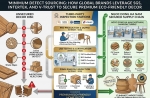
The solution to mitigating anti-dumping risks is not to retreat from global sourcing, but to elevate your sourcing standards. Global buyers must seek out legitimate, vertically integrated manufacturers located in compliant trade regions. Vietnam has solidified its position as the premier destination for high-quality, sustainable home decor, but true security lies in partnering with a manufacturer that champions transparency and global compliance: Ngoc Dong Ha Nam.
The Power of Vertical Integration
At Ngoc Dong Ha Nam, we eliminate the compliance risks that plague modern supply chains. Because we are a vertically integrated manufacturer, we control every single phase of the production process. From the sustainable harvesting of local Acacia wood and bamboo to the hand-weaving of natural fibers like seagrass, rattan, and water hyacinth, we maintain an unbroken, transparent paper trail. We do not import semi-finished components from high-risk countries; every product is genuinely manufactured from scratch in our state-of-the-art facilities in Ha Nam, Vietnam.
Uncompromising International Certifications
Our commitment to compliance is validated by the world’s most rigorous third-party auditing bodies. When you partner with Ngoc Dong Ha Nam, you gain access to an arsenal of gold-standard certifications that serve as your ultimate shield against customs audits:
Where Sustainability Meets World-Class Design
We believe that compliance and sustainability should never compromise aesthetic excellence. Our in-house design team collaborates with global buyers and interior designers to create stunning, eco-conscious collections. By utilizing fast-growing, highly renewable materials like bamboo, seagrass, and water hyacinth, we help your brand tell an inspiring story of green living while guaranteeing 100% legal and regulatory safety.
FUTURE-PROOF YOUR SUPPLY CHAIN: YOUR ACTIONABLE STEP-BY-STEP COMPLIANCE ROADMAP
Protecting your brand from unexpected tariffs and legal liabilities requires immediate, proactive action. Use this step-by-step roadmap to audit your current sourcing practices and transition to a secure, compliant partnership with Ngoc Dong Ha Nam.
Step 1: Conduct a Comprehensive Supply Chain Audit
Review your current vendor portfolio and demand full disclosure of their raw material supply chains. Ask yourself: Can my current supplier provide the exact plantation coordinates where their wood or bamboo was harvested? If the answer is vague, your supply chain is vulnerable.
Step 2: Verify Certifications at the Source
Do not accept PDF certificates at face value. Cross-reference your suppliers' FSC, BSCI, and SMETA certification numbers directly on official global databases. Ensure their certificates are active, valid, and registered under the exact corporate entity manufacturing your goods.
Step 3: Mandate Clear Customs Documentation
Ensure that all future purchase agreements require the exporter to provide comprehensive documentation, including detailed material traceability reports, genuine Certificates of Origin (Form B or relevant free trade agreement forms), and detailed production flowcharts.
Step 4: Partner with Ngoc Dong Ha Nam
Secure your inventory and protect your bottom line by initiating a partnership with Vietnam’s leading compliant manufacturer. Our team of sustainable supply chain experts is ready to assist you in transitioning your product lines to our fully certified, risk-free facilities. Whether you require custom OEM/ODM designs for a global retail rollout or curated collections for high-end interior design projects, Ngoc Dong Ha Nam delivers peace of mind alongside unparalleled craftsmanship.
Don't wait for a customs audit to disrupt your business. Contact Ngoc Dong Ha Nam today to request a free supply chain risk assessment and discover how our certified, sustainable home decor can elevate your brand safely.
FREQUENTLY ASKED QUESTIONS
What are the financial risks of anti-dumping duties (ADD) for B2B importers?
Financial risks include retroactive tariff assessments that can exceed 190% of the product's declared value, customs seizures, shipment delays, and legal fees. These penalties are levied directly on the importer of record, which can lead to severe cash flow issues or bankruptcy.
How do customs authorities detect circumvention of anti-dumping duties?
Customs authorities use physical inspections, laboratory analysis of wood species, and comprehensive audits of factory production logs, energy bills, and raw material invoices. They look for an unbroken paper trail proving that substantial transformation occurred in the declared country of origin.
Why is FSC certification crucial for avoiding trade penalties on wooden products?
FSC (Forest Stewardship Council) certification provides legally verifiable chain-of-custody documentation. This proves the timber or bamboo was legally harvested from responsibly managed forests, satisfying the strict requirements of the US Lacey Act and the EU Deforestation Regulation (EUDR).
Are bamboo products subject to the same anti-dumping duties as wood?
Yes. Although bamboo is botanically a grass, it is classified under Chapter 44 of the Harmonized Tariff Schedule (HTS) alongside wood. This means bamboo products are subject to the same rigorous trade regulations, customs classifications, and anti-dumping investigations as wooden products.